Journal · 6 min read
15 Long Distance Grandparent Ideas, Sorted by Age
What are good long distance grandparent ideas?
Pick one short live ritual, like a five-minute show-and-tell call, and one thing that doesn't need everyone free at once, like voice notes or mailed photos. Match both to the child's age. Keep the rhythm small enough to survive a bad month.
Ideas for babies and toddlers
At this age the goal is recognition: the same face, voice and song, often.
1. Turn video calls into show-and-tell
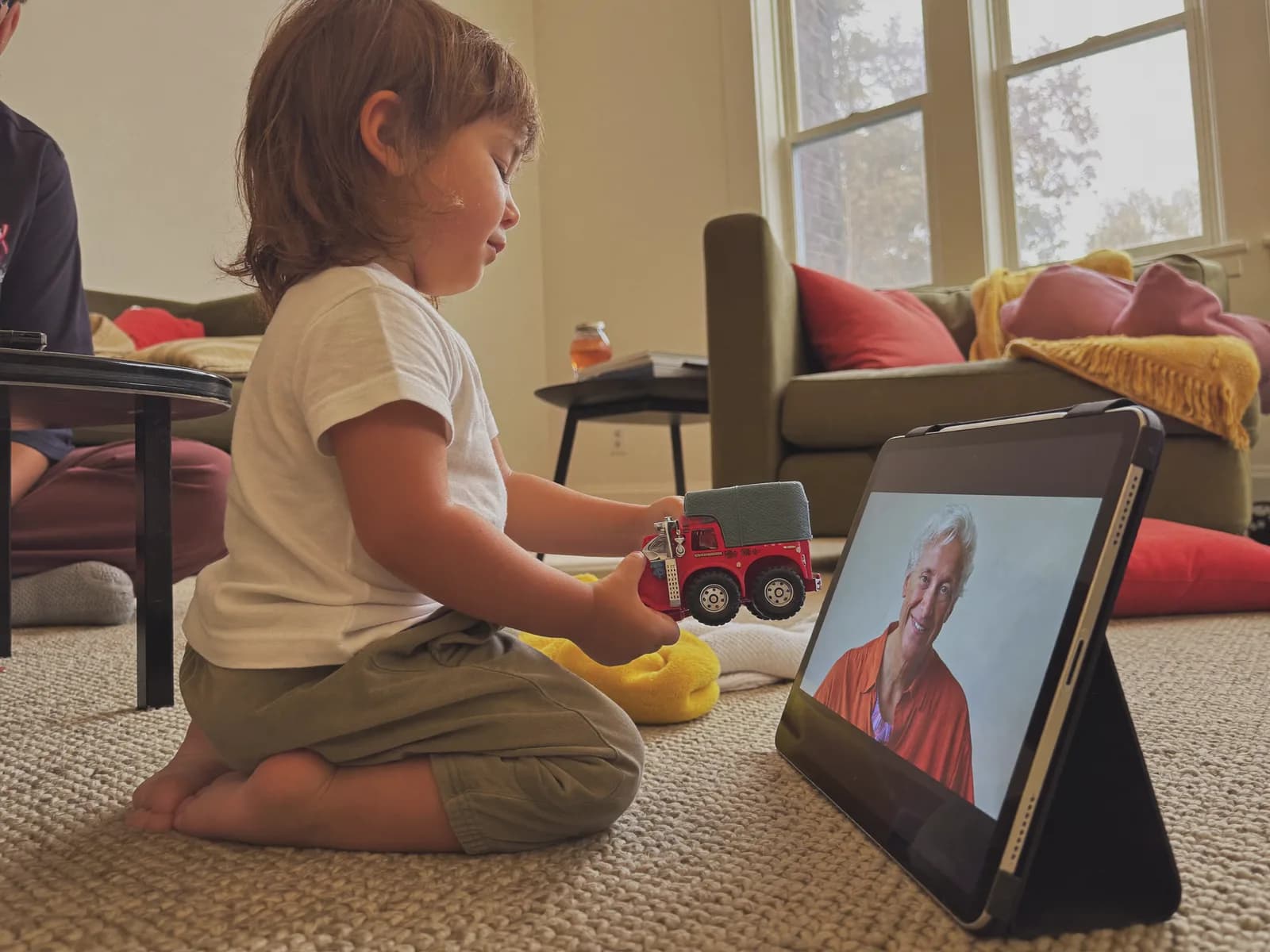
Each side brings one object: a toy, a snack, something red. Five minutes of that beats thirty of “How was your day?” End while it's still fun.
2. Keep the same book in both houses
Grandpa reads on the call while the child turns the pages of her own copy. Toddlers want the same book forty times. Let them.
3. Record a bedtime song or story
A two-minute recording the parents can play any night. No calendar to match, and it works on the nights a call would fall apart.
4. Make a photo book of the grandparents
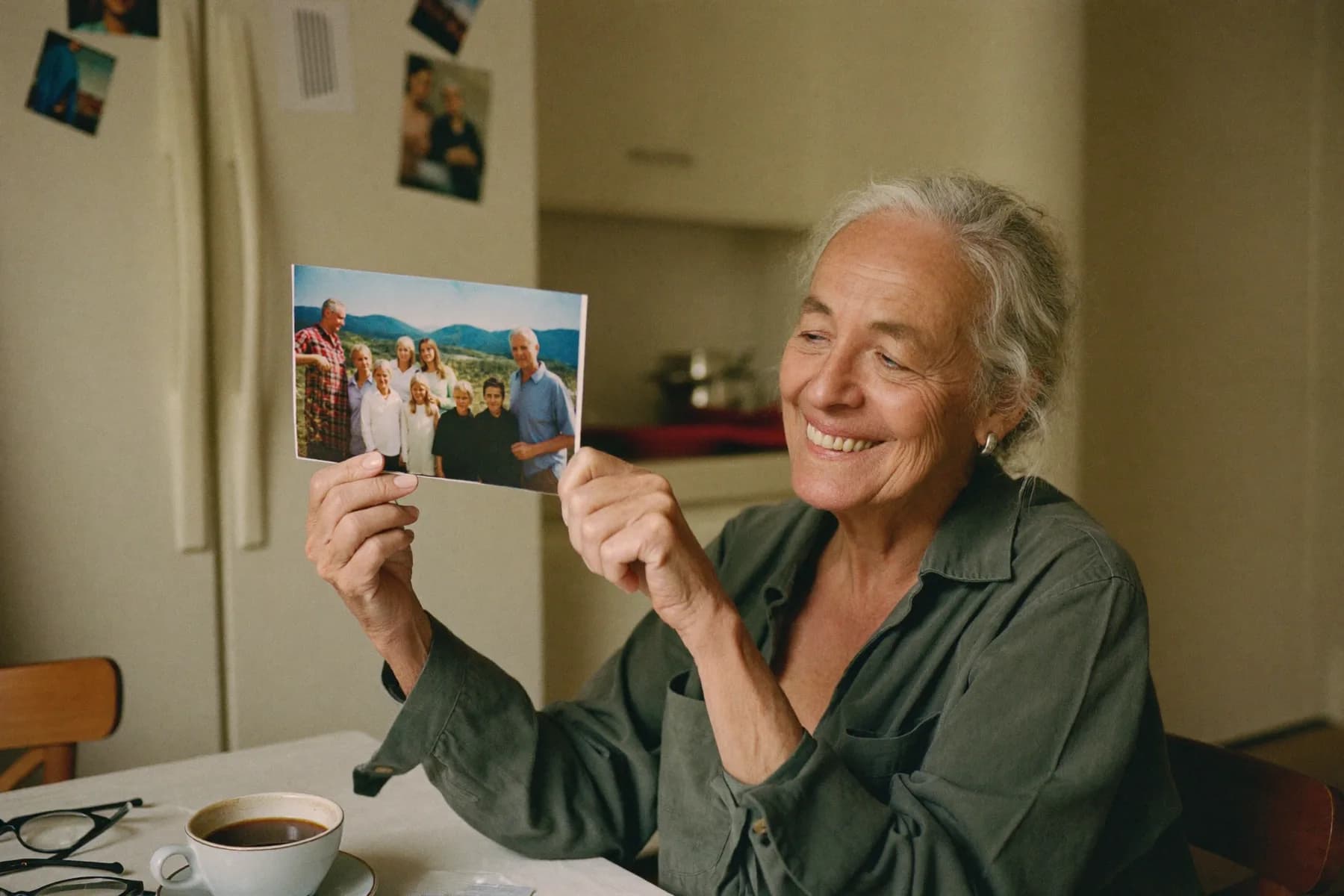
Ten pictures of Grandma and Grandpa, at toddler height. The face on the screen stops being a stranger.
5. Put the next visit on a paper chain
One link per day until they arrive. The child tears one off each morning, and the visit becomes something to count down to.
Before the first call, someone has to settle what the grandchildren call him.
Her side runs differently, because the name a grandmother picks is rarely the one a toddler keeps.
Ideas for school-age kids
Now they can hold up their end. Give them projects with a beginning and an end.
6. Mail ordinary life, not just milestones
A postcard from a normal Tuesday: the lost tooth, the muddy shoes, the thing she said in the car. Small news is easier to send, and easier to answer.
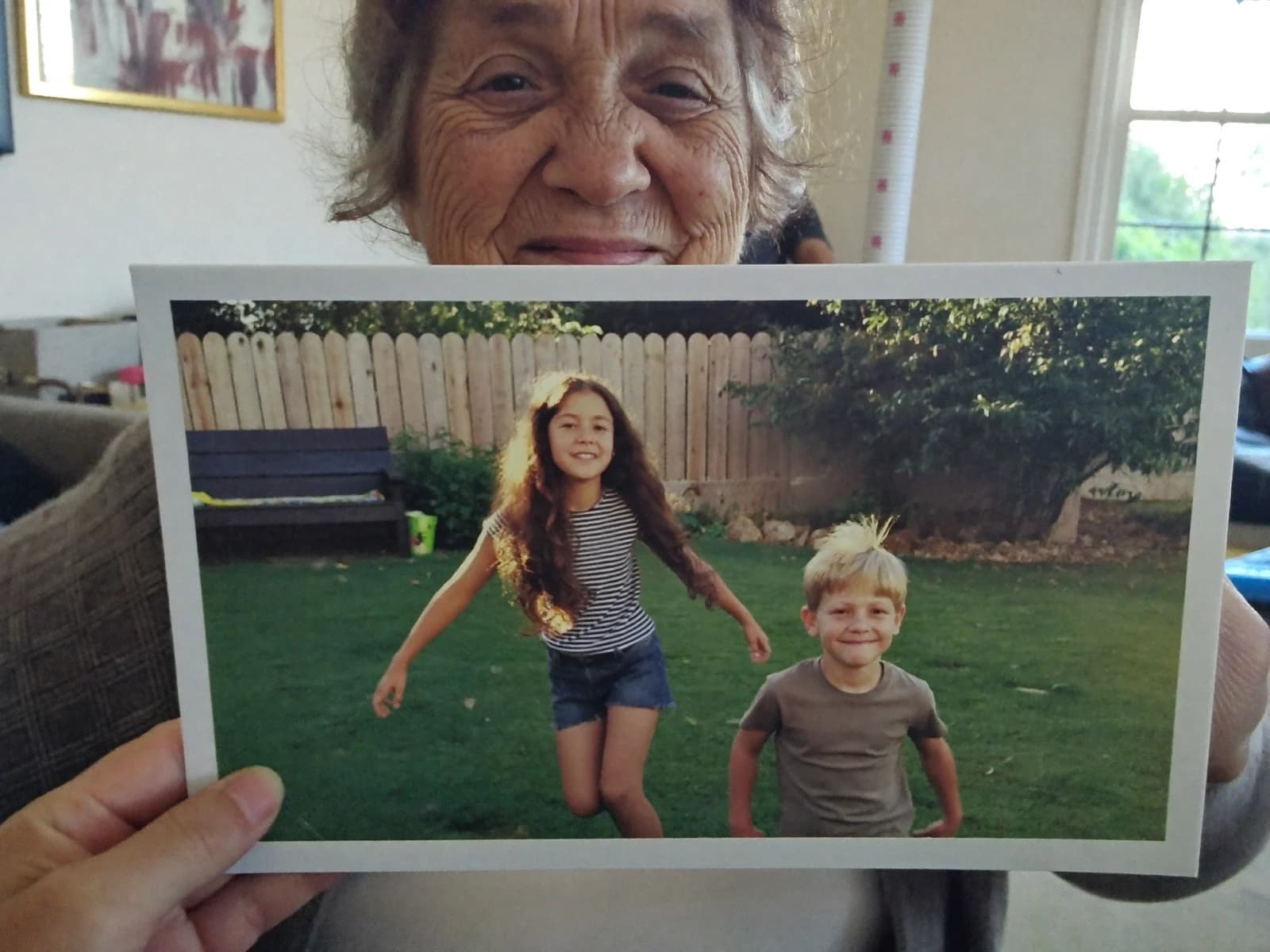
You can send a postcard to Grandma from your phone with this week's photos on the front, and skip the stamp.
7. Write a story in turns
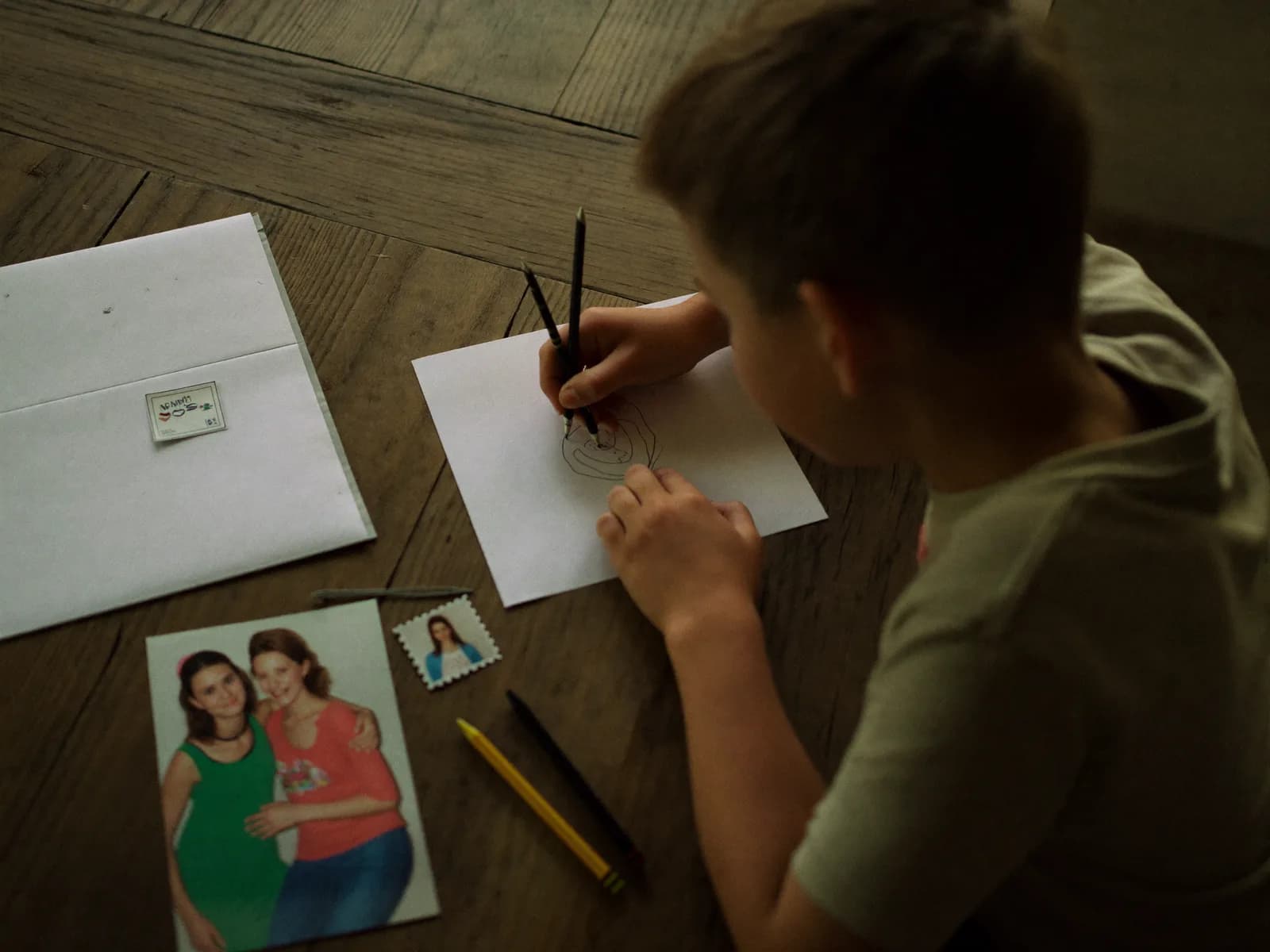
Invent one character. Each side adds a few sentences and mails or voice-notes it back. The child decides what happens next.
8. Let the grandparent assign a tiny mission
Find the smallest leaf. Count yellow doors on the walk home. Photograph the moon. The next call starts with an answer instead of a blank.
9. Cook one recipe in two kitchens
Same recipe, same weekend. Trade photos of how it turned out. Ask who taught Grandma to make it.
10. Mail one notebook back and forth
Each side writes a page and ends with a question, then posts it on. After a year you have a book neither of you could have written alone.
Ideas for teenagers
Drop the children's rituals. Meet them where their attention already is.
11. Text about their thing
Ask about the game he is playing or the band she found last week. One specific question gets further than a weekly check-in.
12. Ask one question about the past each month
Let the teen ask it: “What did you fight with your parents about at my age?” Save the answers in a notes app or a voice memo folder.
13. Ask for their help
Setting up the new phone. A playlist for the drive. Teens like being the expert, and it gives them a reason to call.
Ideas that work at any age
14. Send voice notes instead of booking calls
Twenty seconds is enough. Time zones stop mattering, and each side answers when the moment is right.
15. Follow the same thing from two places
The same baseball team, or a tomato plant in each yard. It gives you something to mention that isn't “What's new?”
Research on remote grandparent-grandchild communication also points to shared activities as the bridge to easier conversation.
North Dakota State University Extension likewise recommends books, letters, pictures and regular contact for grandparents at a distance.
What is a good gift for a long-distance grandparent?
Something that keeps bringing the grandkids to them. Gifts for long-distance grandparents have to survive the mail and need no setup, because you won't be there to do it.
- A digital photo frame the family loads from their phones. Skip it if nobody nearby can fix the Wi-Fi.
- A recordable storybook. She reads it aloud into the book and mails it back for bedtime.
- A child's drawing, framed, with the date and the artist's age on the back.
- A wall calendar with every birthday and the next visit already marked.
- Photo postcards from the grandkids, mailed through the year. We make these: up to four photos on a 4x6 card, printed and mailed for you.
If the gift is going by post anyway, homemade gifts that survive the post are worth a look.
Postcards are the easiest of these to repeat. Here is how to send photos to grandparents with nothing for them to set up.
5 mistakes long-distance grandparents make
01
Turning every call into a quiz
“How was school?” gets “Fine.” Bring something to show instead.
02
Calls that outlast a toddler
Five good minutes beat twenty restless ones. Hang up first.
03
Leaving the parents to run it all
Grandparents can start things too: mail the first postcard, send the first voice note.
04
Only showing up for milestones
Birthdays matter, but closeness is built in the ordinary weeks between them.
05
Overruling the parents from a distance
Bedtimes, screens and sugar are their call. Back them up, even when you'd do it differently.
Frequently asked questions
- How often should long-distance grandparents call?
- As often as everyone can keep up without resentment. A short weekly call works for many families; twice a month may be more realistic across time zones. Predictable beats frequent.
- How do you keep a toddler engaged on FaceTime with grandparents?
- Keep it short and give the call an activity: show-and-tell, a matching book, a song or a tiny scavenger hunt. Toddlers can't hold a conversation on command, but they can show you a truck.
- How can grandparents stay in touch without a smartphone?
- Use the mail, landline calls, printed photos and recordings someone else sets up. Keep every app, login and fix on the sending side, not with the grandparent.
- What is the golden rule for grandparents?
- The parents make the rules, and grandparents back them up. Offer advice when it's asked for, and keep disagreements away from the grandchildren.
- At what age do grandkids lose interest in grandparents?
- Contact often dips in the early teens, when friends and school take over. It usually comes back if you follow their interests and stop asking for updates.